

UF Membrane Vertical vs. RO Membrane Horizontal Arrangement: Key Considerations
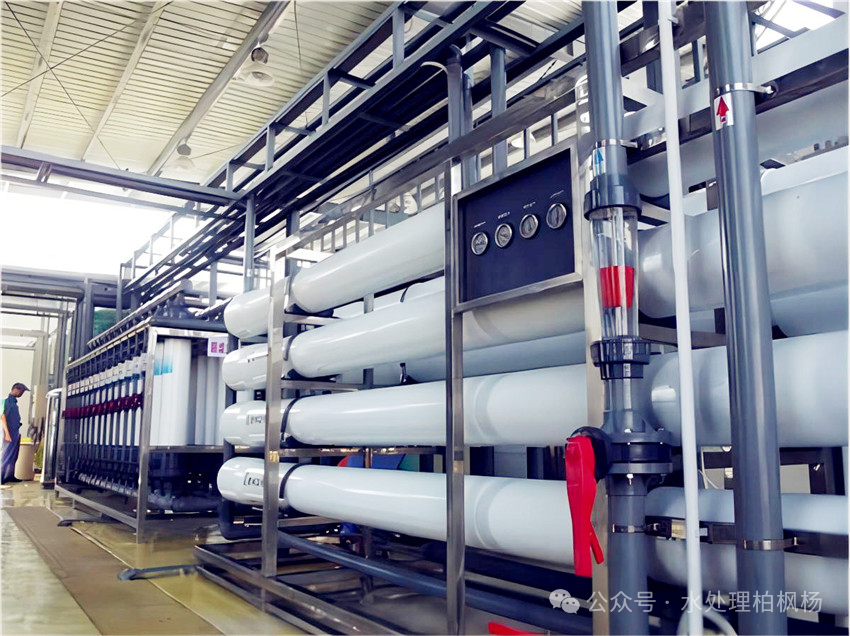
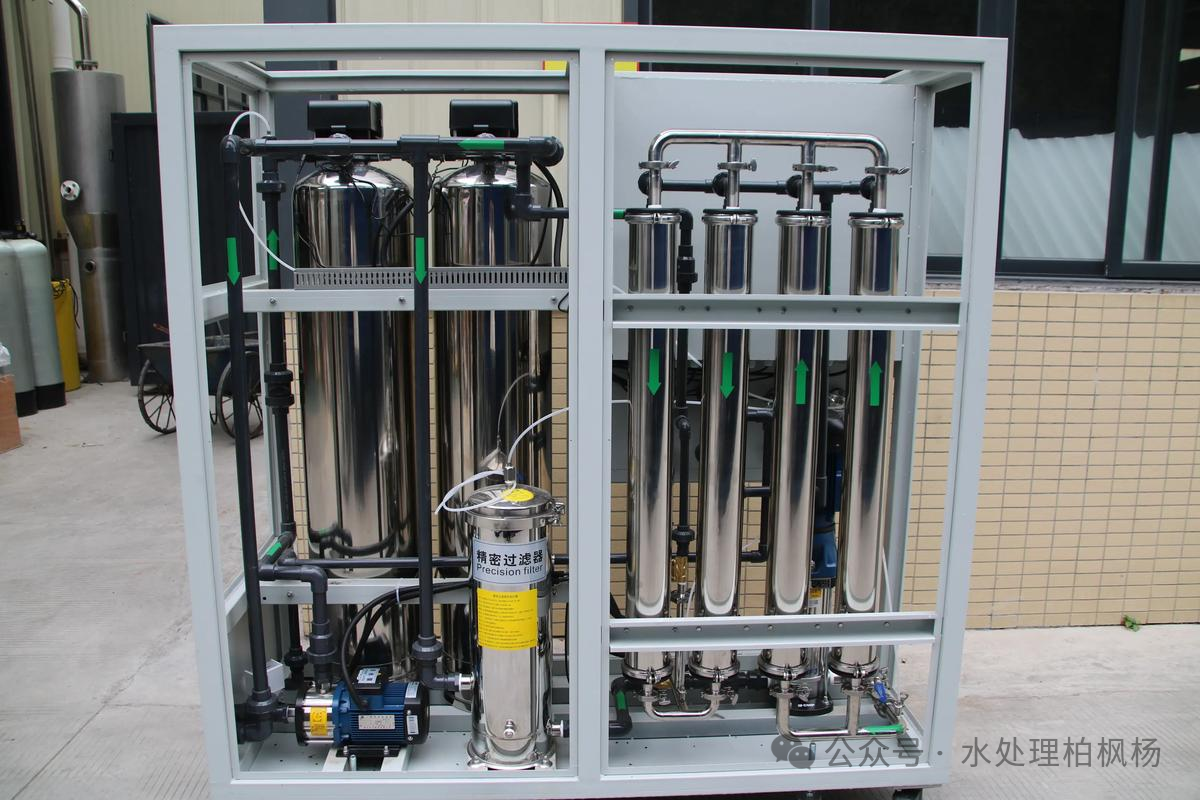
In the water treatment industry, the common arrangement of ultrafiltration (UF) and reverse osmosis (RO) membranes is typically as follows: UF membranes are mostly installed vertically, while RO membranes (and their pressure vessels) are usually placed horizontally.
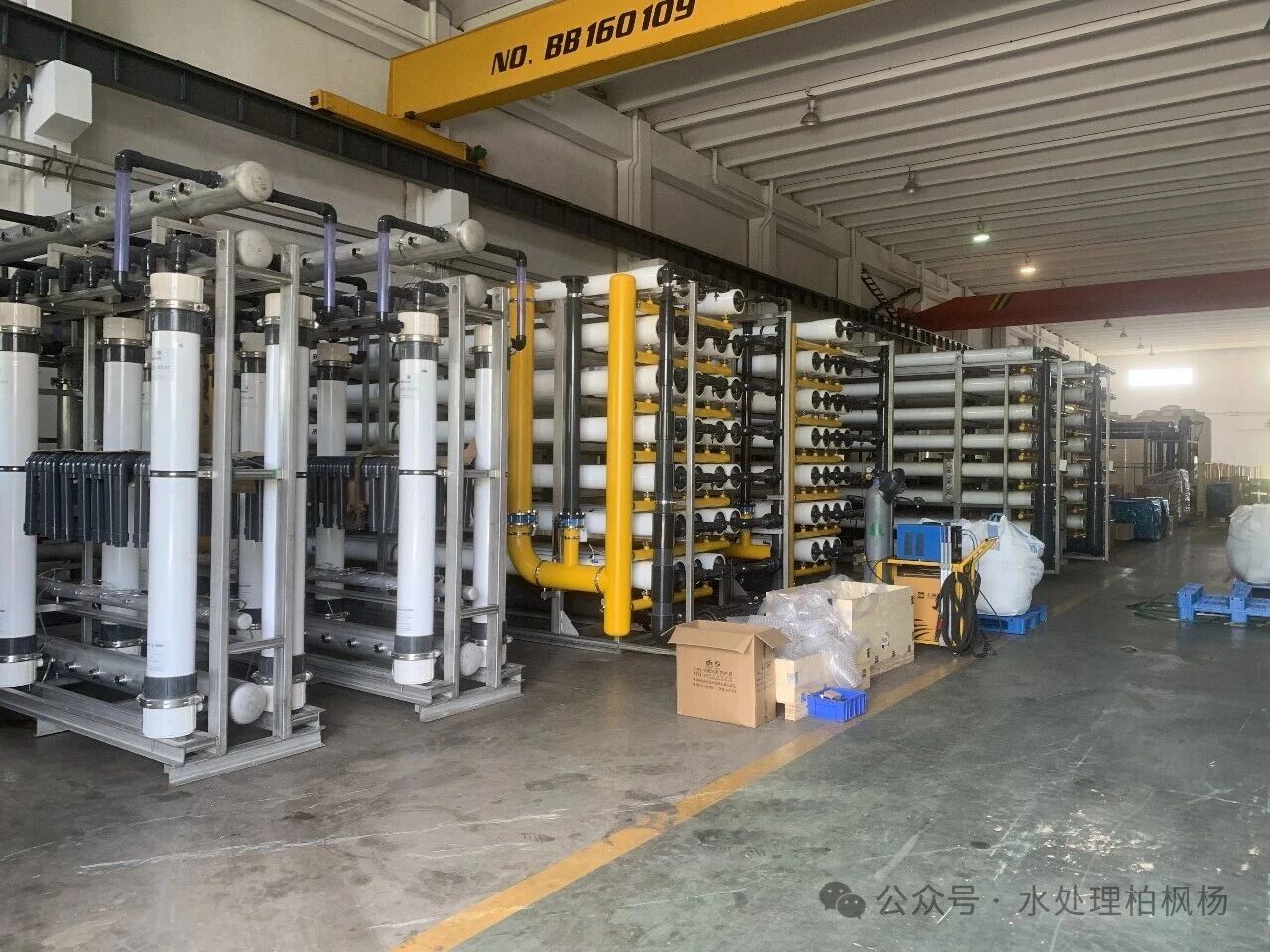
Of course, in some small-scale pure water systems, RO membranes may also be arranged vertically.
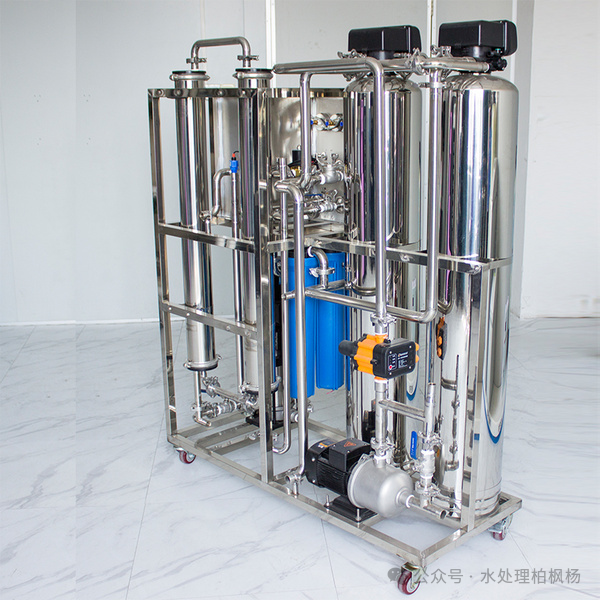
This often raises a question among many clients: Does a vertical arrangement of RO membranes cause any problems?
The answer is: hardly any.
1. Space Utilization Requirements
To understand why UF membranes are usually vertical and RO membranes/pressure vessels are horizontal, we need to look at one of the key advantages of membrane separation technology – its ability to drastically reduce the footprint.
In industrial applications, floor space is extremely valuable. Many pretreatment measures that treat membranes as delicate assets are, in fact, counterproductive. Therefore, compact arrangement maximizes the space-saving advantage of membrane systems.
In system design, UF membranes are rarely connected in series like RO membranes; they are generally shorter in length. Taking the SFP‑2880 as an example, its housing length is 92.9 inches (2.36 m). In such cases, horizontal arrangement does not offer better space utilization compared to vertical placement.
Note: In high‑flux, low‑turbidity applications, longer UF membranes exist, where horizontal arrangement may have certain advantages.
Conversely, in medium‑ to large‑scale projects, RO pressure vessels typically house 6, 7, or even 8 elements each, making the total length reach 6.5–8.5 meters. If arranged vertically, this would impose higher demands on installation, fastening, and ceiling height. Thus, horizontal stacking (up to about 10 layers in height) makes better use of available space and is more operator‑friendly for maintenance.
2. Influence of Gravity
While vertical UF and horizontal RO are generally advantageous in most applications, in specific scenarios the conclusion may be reversed – or at least debatable – such as in large seawater desalination projects.

[Image descriptions omitted: Sorek desalination project in Israel, 16‑inch RO elements]
During membrane separation, gravity plays a role. If membranes are oriented vertically and feed water flows upward from bottom to top, contaminants are less likely to adhere to the membrane surface. Conversely, when membranes are horizontal, gravity may cause greater fouling accumulation at the bottom of the elements.
This difference is more pronounced under high‑fouling feed water conditions, which is why vertical RO pressure vessels are more meaningful in desalination plants than in traditional surface water or municipal tap water applications.
In short, when feed water has high turbidity or contaminant levels, vertical orientation makes it harder to rely on gravity to slow fouling, extend membrane life, or reduce chemical cleaning frequency and costs. However, it also raises the bar for system design and initial investment.
Returning to the earlier mentioned 0.5 m³/h and 1.0 m³/h systems: the former often uses a 1‑1/1 array, while the latter uses a 2‑1‑1/1 or 2‑2/1 arrangement. Neither arrangement purposely ensures that feed water enters each membrane element from bottom to top. So, in a sense, they cannot effectively utilize gravity, and may even introduce flow instability.
However, given that such systems typically use municipal tap water as feed and are of small scale, the impact mentioned above is almost negligible.


 Links
Links